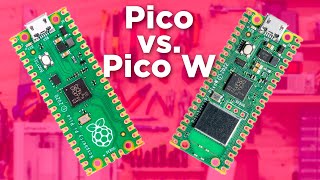
The Raspberry Pi Pico’s Programmable Input/Output (PIO) subsystem, while powerful, has some unexpected behaviors. PIO allows for precise, low-level hardware control, performing as efficiently in MicroPython as in Rust or C/C++. It’s versatile, enabling custom peripheral interfaces without additional hardware complexity. However, PIO programming has its quirks. For instance, the Pico’s state machines, despite their name, are not traditional state machines but tiny programmable processors with their own instruction set, processing one instruction per clock cycle. The Pico 1 runs at 125 million cycles per second, while the Pico 2 runs at 150 million cycles per second. PIO provides only two general-purpose registers, x and y, forcing programmers to be strategic with their use. A challenge like creating a backup beeper with a 1000 Hz tone for 1 second, followed by 1 second of silence, requires clever use of loops and special-purpose registers like osr and isr. Moreover, PIO programs are limited to just 32 instructions, necessitating efficient coding. Understanding these quirks is crucial for effective PIO programming, as demonstrated by the development of a theremin-like musical instrument.
To provide the best experiences, we use technologies like cookies to store and/or access device information. Consenting to these technologies will allow us to process data such as browsing behavior or unique IDs on this site. Not consenting or withdrawing consent, may adversely affect certain features and functions.
Functional
Always active
The technical storage or access is strictly necessary for the legitimate purpose of enabling the use of a specific service explicitly requested by the subscriber or user, or for the sole purpose of carrying out the transmission of a communication over an electronic communications network.
Preferences
The technical storage or access is necessary for the legitimate purpose of storing preferences that are not requested by the subscriber or user.
Statistics
The technical storage or access that is used exclusively for statistical purposes.The technical storage or access that is used exclusively for anonymous statistical purposes. Without a subpoena, voluntary compliance on the part of your Internet Service Provider, or additional records from a third party, information stored or retrieved for this purpose alone cannot usually be used to identify you.
Marketing
The technical storage or access is required to create user profiles to send advertising, or to track the user on a website or across several websites for similar marketing purposes.