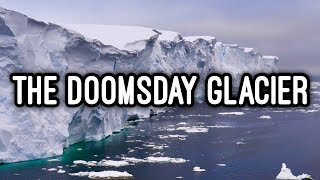
The Thwaites glacier, known as the “doomsday glacier,” spans an area larger than Florida and rises nearly 4,000 feet above West Antarctica’s bedrock. It holds enough ice to raise global sea levels by over two feet if it melts entirely. A warm ocean current is currently weakening the glacier’s base, accelerating its movement into the Amundsen Sea. Scientists warn that the glacier’s collapse could trigger a catastrophic disintegration of the West Antarctic Ice Sheet, potentially raising sea levels by 11 feet over centuries.
To address this looming crisis, the Arte Glacier Initiative was established by MIT and Dartmouth College. The nonprofit, which has raised about $5 million, aims to fund research into preventing glacier loss, particularly through refreezing techniques. On March 21, Arte announced its first grants of approximately $200,000 each to researchers at the University of Wisconsin-Madison. These grants will support studies on glacier dynamics and the feasibility of interventions like basal interventions, which involve refreezing glaciers to their bedrock.
Despite the potential of these interventions, significant challenges remain. The concept is still theoretical, with uncertainties about costs, feasibility, and environmental impacts. Current sea-level rise forecasts for this century range from 0.28 meters to 1.10 meters, with a low-likelihood scenario suggesting a rise of nearly two meters by 2100. Such rises could displace nearly 190 million people without adequate coastal protections.
Alan C. Smith
@algingersmith
·
8h There’s no ‘risk.’ It’s absolutely guaranteed.
Why do these articles always use this equivocal language. Nothing is more certain. Glaciers will disappear.
#r4today #climatecrisis
Glenn Koepke
@LogTech1999
·
Dec 23, 2024 Have you heard about the Thwaites Glacier, aka the Doomsday Glacier?
It’s melting rapidly, and scientists are warning that its collapse could mean global flooding and disaster.
Here’s what’s happening and how supply chains can adapt:
Jorie Graham
@jorie_graham
·
4h Meanwhile the actual FAFO while the wannabe dictators slash & burn the US— climate policy,energy policy, safety net (so called), education, research, etc
Glacier meltdown risks food and water supply of 2 billion people, says UN | Glaciers | The Guardian
PeteЯ
@Barkum68
·
7h Many glaciers in Europe and North America will not survive the end of the century, warns the WMO and the World Glacier Monitoring Service.
Bullshit, our future will be very cold with the fall silent of the AMOC and the arrival of the Grant Solar Minimum between 2040 and 2050.
Gary McCollom
@GaryMccollom
·
Mar 14 This could very well happen and possibly soon as well.
The worlds largest volcanic ridge in beneath Thwaites and Pine Island and its active below the ice.
Will not likely melt or blow it off with an eruption but it will turn the bottom of the glacier to slush and eventually
To provide the best experiences, we use technologies like cookies to store and/or access device information. Consenting to these technologies will allow us to process data such as browsing behavior or unique IDs on this site. Not consenting or withdrawing consent, may adversely affect certain features and functions.
Functional
Always active
The technical storage or access is strictly necessary for the legitimate purpose of enabling the use of a specific service explicitly requested by the subscriber or user, or for the sole purpose of carrying out the transmission of a communication over an electronic communications network.
Preferences
The technical storage or access is necessary for the legitimate purpose of storing preferences that are not requested by the subscriber or user.
Statistics
The technical storage or access that is used exclusively for statistical purposes.The technical storage or access that is used exclusively for anonymous statistical purposes. Without a subpoena, voluntary compliance on the part of your Internet Service Provider, or additional records from a third party, information stored or retrieved for this purpose alone cannot usually be used to identify you.
Marketing
The technical storage or access is required to create user profiles to send advertising, or to track the user on a website or across several websites for similar marketing purposes.